
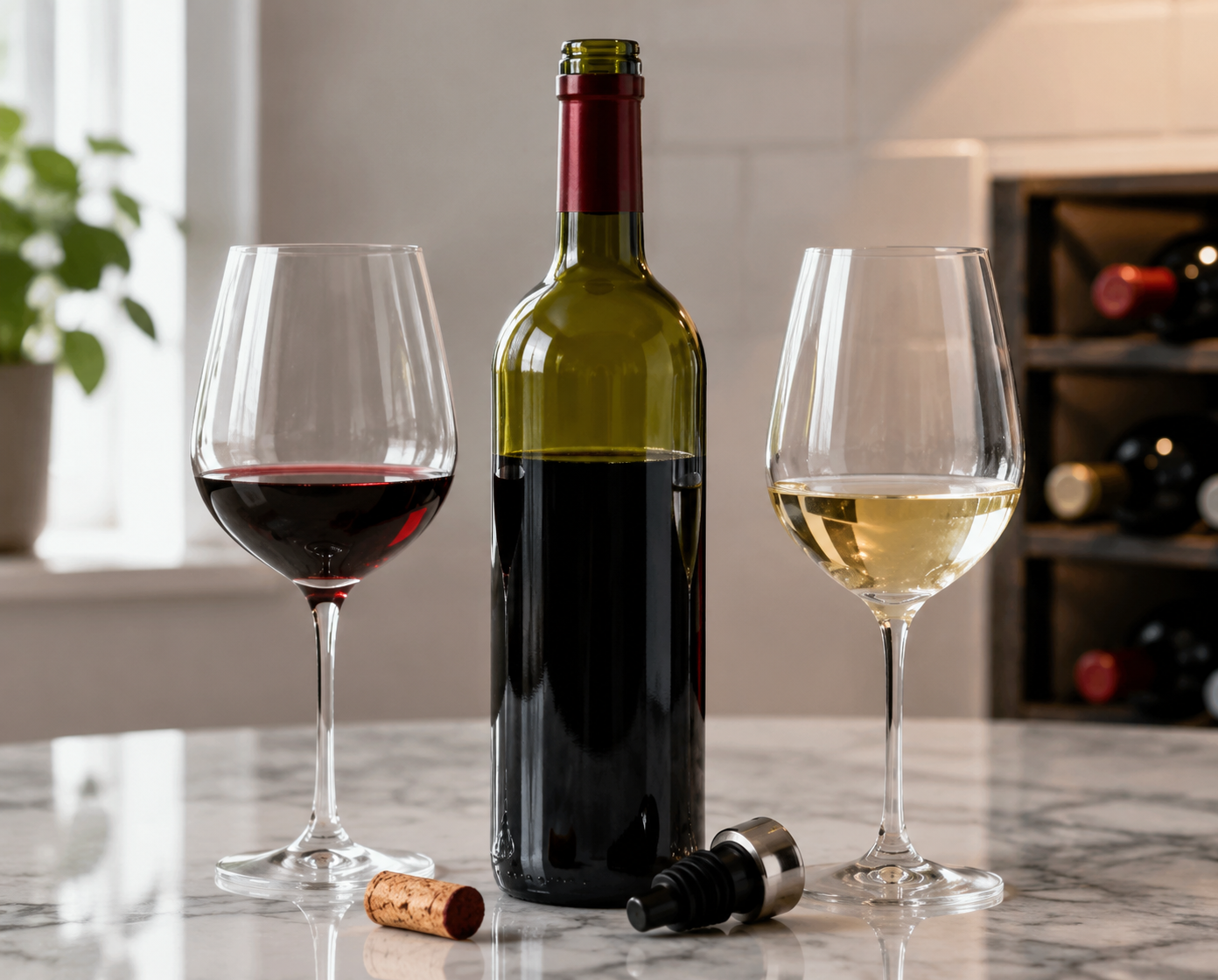
You open a bottle, pour yourself a glass, and everything feels right. But after a few days, you might wonder if the wine is still good to drink. As soon as air hits the wine, it starts to change.
That first bit of oxygen helps a young red wine develop its flavours, but if the wine sits out too long, the same oxygen can make it taste flat and sour. How long wine lasts after opening depends on the type, red, white, rosé, sparkling, or fortified, since each one changes at its own pace.
This blog explains why opened wine changes, how long each type typically stays fresh, and offers some wine preservation tips to help your wine last longer.
Oxygen can help and hurt wine. A little bit softens tannins and brings out aromas, which is why people decant bold red wines. But if wine is left open too long, oxidation takes over, the colour fades, and the flavours become flat or vinegary. It’s like how a cut apple turns brown, just more slowly.
Heat makes wine spoil faster. If you leave a bottle on the counter overnight, it will go bad more quickly than if you keep it in the fridge, even if you put the cork back in. Light also affects wine, especially for white wines in clear bottles.
Tannin, acidity, sugar, and alcohol help preserve wine naturally. This is why a rich Shiraz can last longer than a light Pinot Grigio, and why a Port can stay good for weeks even after opening.
Most red wines stay good for 3 to 5 days if you recork them and keep them in a cool, dark place. Reds with more tannin, like Cabernet or Nebbiolo, can last a bit longer than lighter reds.
If you only get through half a bottle in a sitting, it helps to choose wisely from the start. That’s part of the reason so many people buy premium Italian red wine rather than whatever’s cheapest on the shelf; better structure means it’s more forgiving once opened.
White wines also last about 3 to 5 days, but crisp types like Sauvignon Blanc taste much fresher on the second day than on the fourth. Put the bottle back in the fridge right away and avoid leaving it out for too long.
Worth a mention: if you mostly reach for reds, it might be time to explore white wine too, especially through the warmer months.
Rosé lasts about 3 to 5 days in the fridge. Because it has less tannin, it can lose its freshness a bit faster, so it’s best to treat it like a white wine.
Sparkling wine loses its fizz the fastest. As soon as you open the bottle, the bubbles start to disappear. Even with a special stopper, most sparkling wines taste best within 1 to 3 days.
Ports and sherries last the longest. Their higher sugar and alcohol levels help them stay good for several weeks, sometimes even a month or more, as long as they are sealed and kept away from heat.
Full-bodied reds generally hold up longer than delicate whites or rosés, simply because they carry more tannin to begin with. A light, fruit-forward wine like a Pinot Grigio or a young Rosé has less structure to lean on, so it tends to fade within a couple of days. Bigger, more concentrated styles can often stretch a day or two further without losing much character.
Alcohol acts as a mild preservative, which is part of why fortified wines like Port and Sherry last so much longer once opened. A standard 12-14% table wine doesn’t get that same benefit, so it oxidises at a fairly predictable rate. As a rough rule, the higher the alcohol, the more forgiving the bottle is if it sits around for a while.
Sugar helps preserve wine in a similar way to alcohol, which is why sweeter styles tend to outlast bone-dry ones. A dessert wine or late-harvest Riesling can often go two or three weeks in the fridge and still taste fine. Dry wines don’t have that cushion, so they’re more sensitive to time and temperature.
Heat is one of the fastest ways to age a bottle prematurely. Wine left at room temperature breaks down noticeably more quickly than wine kept cool and consistent in the fridge. Even a few degrees can make a difference over several days, so consistency matters just as much as the exact number.
The type of seal plays a bigger role than most people realise. Screw caps tend to create a tighter seal than a cork that’s already been removed and pushed back in, which limits how much extra oxygen gets in. Damaged or crumbling corks are the worst offenders, since they let air seep in steadily even when the bottle looks closed.
A few reliable wine preservation tips go a long way without any special equipment.
Reinsert the cork firmly, or flip it if the original side is damaged. Refrigerate the bottle regardless of colour, standing it upright once open.
A wine vacuum pump removes excess oxygen, and dedicated preservation systems go a step further for anyone who often has half a bottle left.
A strong vinegar smell is usually the first sign that wine has gone bad, along with a flat or dull taste.
Also look for colour changes, reds turning brownish, whites becoming more amber, and a loss of fruity aroma.
In most cases, it’s safe to drink wine that has gone bad. Oxidised wine won’t make you sick like spoiled food can; it just tastes bad. However, if it smells strongly of vinegar or you see mould near the cork, it’s best to pour it out.
Buy smaller bottles to cut down on leftovers. Keep wine away from heat and sunlight, minimise how much air gets in, and lean on preservation tools where you can. Honestly, the simplest fix is opening a bottle only when you’re actually ready to drink it.
It should, actually, once open. Cooler temperatures slow oxidation regardless of colour.
Not always. A $15 bottle with good acidity can last longer than a $100 bottle with low tannin.
Corks slow down oxidation but do not stop it completely. Air can still get in over time.
It’s unlikely. Most sparkling wines lose their bubbles within a few days, even if you use a stopper.
Red and white wines usually last 3 to 5 days; rosé lasts about the same; sparkling wine fades fastest at 1 to 3 days; and fortified wines can last for weeks. All you need is a fridge, a tight cork, and a little care.
Following a few best wine buying tips, like checking acidity and tannin before committing to a bottle, makes the whole storage question easier from the start. And if you’re someone who enjoys a glass most evenings rather than finishing a bottle in one sitting, it helps to buy premium Italian red wine with enough structure to hold up over a few days. Plus, a decent storage accessory or two pays off quickly with better-tasting wine.
Thinking about stocking up?
Conte Bros Importers has provided Melbourne’’s restaurants, shops, and home cellars with quality Italian and Australian wines since 1984. Whether you want a bold red, a crisp white, or tips for keeping your wine fresh, our team is ready to help. Call us at (03) 9466-3612 or visit to see our full selection.